Friday, October 21, 2016

fangs for the memories

Salem’s Lot (1979 CBS miniseries; d: Tobe Hooper)


There once was a time when the word “vampire” conjured up something entirely different from its modern iteration.  A lot of younger readers won’t understand this, but yes, at one point in time vampires were actually quite horrific.


When vampires speak—if they speak—they ought not to have very good personalities.  What I mean to say, is, the function of speech should be perfunctory at most, and serve as a desperate means to an end to get blood, and nothing else, because that is what makes them terrifying.  And that is what has been lost for so long that people forget that vampires were once considered—for most, for many years, in fact—the ne plus ultra of the horror monster.  The alpha-evil.  They aren’t anymore, not even remotely.  That vein collapsed long ago.


You can blame this on any number of factors and influences, but it really all boils down to money.  When vampires became big business in the 80’s (with the popularity of Anne Rice’s books) and again with the more recent “Twilight” series, their popularity had a built-in watering down effect, as it were. There is no way either author would’ve enjoyed so much success without changing things up and appealing to a cross-over audience (that wouldn’t normally gravitate towards horror), and in that sense their popularity served to homogenize the entire subgenre, to make it all that much more palatable, and, in turn, unrecognizable.  And so they have ceased to be truly frightening for many years.  Prior to 1980, there were a good many blood-chilling takes on the vampire legend in movies, television, and books.  Beyond that point, I can recall very few (beyond the printed page), and even those are debatable. 

Okay, I'll give FRIGHT NIGHT (1985), and Evil Ed (Stephen Geoffreys), a pass.

And so I submit to you a new benchmark, so to speak—which also happens to be the old benchmark—SALEM’S LOT, the CBS miniseries directed by Tobe Hooper (director of the original TEXAS CHAINSAW MASSACRE), based on the 1975 novel by Stephen King.  If horror fans are ever going to reclaim vampires, to resurrect them from a most ignominious fate, we should start by taking a good look at the last time somebody got it right.  And so let me take a moment and pay my regards to the true face of horror—the vampire.


It doesn’t take great intelligence or dazzling special effects (or blood-soaked gore) to emphatically scare people, but rather a simple, rigid set of principles and a keen understanding of horror itself.  Horror is all about the fear of the unknown.  When you get too chummy with your monsters, they cease to be frightening (something viewers of THE WALKING DEAD are all too aware of). 


SALEM’S LOT was no masterpiece, but it didn’t need to be to achieve its ends—to scare the heck out of its audience.  Stretched out over 184 minutes (that’s without the commercials) and spread out over two nights on network television in November, 1979, it faced innumerable hurdles and restrictions, network censors not being the least of which.  And with that lengthy running time, we also get a slow, deliberate pace and introductions to dozens of characters before it gets down to the real business at hand.  


Ralphie Glick (Ronnie Scribner) pays back older brother, Danny (Brad Savage), for all those atomic wedgies.

But get down, it does...


The story involves a small town in Maine, the recent arrival of a writer (David Soul) working on a book about the infamous Marsten house, which just so happens to coincide with another arrival—that of the house’s new owner, the inscrutable Mr. Straker (James Mason), who is opening an antique shop in town with an as-yet unseen partner, a Mr. Barlow.  I won't get too bogged down into typical plot summary territory on this one, because it is beside the point.  


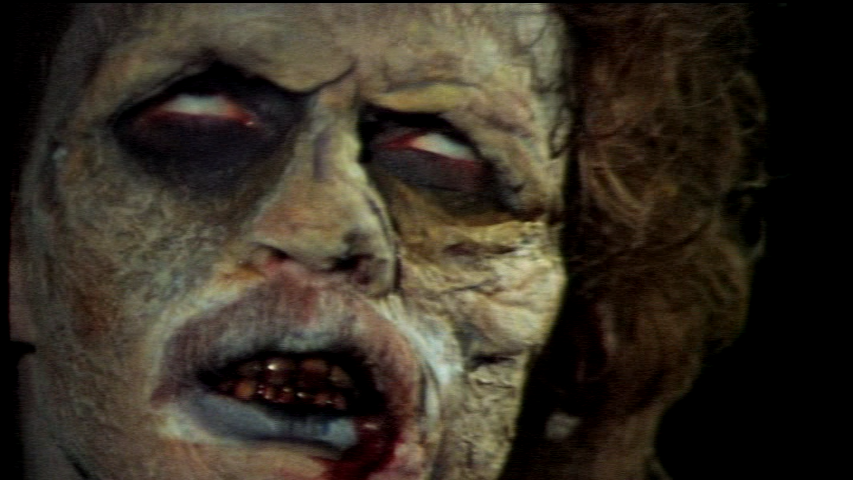
Amid the newcomers, freshly delivered from Europe, is a vampire.  Now, this vampire—which we rarely see and never utters a word throughout—carries with it the absolute essence of evil.  It doesn’t harbor romantic notions or feelings of persecution—or any feelings, for that matter.  It simply must feed, and in the small town of Salem’s Lot it has found, for the time being, an ideal hideaway and hunting ground.


And one by one the townsfolk begin to succumb, vanishing or appearing to die outright, a scourge aided by the bafflement of the local doctor, who chalks up more than one of these mysterious deaths to pernicious anemia (and a couple of others to heart attack).  By the time anyone begins to suspect something foul or evil afoot, it’s all but too late.


Too late, because these people aren’t really dead; at least, not in any traditional sense.  And with nightfall and the uneasy sleep of the grief-stricken comes a gentle scratching or tap-tap-tapping at the window…across from your bedside.  


And what might at first appear to be your dearly departed loved one can, upon closer inspection, cause your skin to crawl and set your heart to racing.  

Mark Petrie (Lance Kerwin), monster kid extraordinaire and one of the enlightened few in Salem's Lot
"Mark...open the window."
SALEM’S LOT might well be old-fashioned—and these might in fact be the musings of an irrepressible fool lamenting a bygone era of horror movies—but let no one call it anemic.


Saturday, October 15, 2016

loose ends

THE PLAYGROUND (originally broadcast June 4, 1985, RAY BRADBURY THEATER)

Sometimes the most effective, relatable horror is that which draws upon real life.  In this episode of Ray Bradbury Theater, William Shatner plays Charlie, the father of a young boy about to begin school, and because of this, starts having PTSD-fueled flashbacks to his own grade school years. 


Things were very rough for little Charlie, a victim of brutal bullying, and his palpable anxiety for his son, Steve, is quite apparent.  It doesn’t help that Steve (Keith Dutson), though gregarious and without trepidation, seems to be naturally earmarked a bully magnet.


The story begins with a brief flashback of Charlie as a boy, being victimized by a group—then cuts to the adult Charlie in mid-trance, playing with his young son while clearly preoccupied with a dread he should’ve long ago recovered from. 


A couple of things are touched upon, hinted at, as examples of his inability to cope with the past trauma. 


A conversation on the train-ride home with a colleague from work indicates things have been strained for him professionally, and that he is faltering amidst the dog-eat-dog competition. 


Also, he lives with his sister, Carol (Kate Trotter), who has a career and is getting married next month—and she is very frustrated and concerned not only for young Steve’s progress, but for Charlie’s mental state. 


She very pointedly illustrates this a few moments in.  “He needs to learn how to play with other boys his own age.  He needs to learn how to adapt, to get along.”  She then suggests he’ll otherwise turn out like Charlie, a stinging barb he lets go unanswered. 


Since Charlie’s wife is no longer around and no explanation is provided, it’s easy to assume (considering what we know so far) that their marriage was an unsuccessful one.


After much prodding by his sister to take Steve to the nearby playground, Charlie relents, only to discover his worst fears come to life upon arrival.  The children seem to sense his nerves, his growing distress, and through his eyes they become fanged, growling, furry little fiends.  Worse yet, his childhood bully, Ralph (Mirko Malish), is among them, sneering knowingly.


It’s clear that Charlie’s perspective is warped, mired in fantasy, whereas his son just wants to play with the other kids.  And with this first visit to the playground, we realize that Charlie’s grip on reality is tenuous at best. 


When he relates the sheer terror of his visit to Carol, that the other children were bloodthirsty animals, she recoils in disgust, demanding he spare her “the graphic details”.


The next evening, he passes the park on his way home from work and is mortified to find his sister has brought Steve there to play again.  "Do you call that playing?!"  A simple game of tag his son is involved in becomes something far more sinister to Charlie.


And once again his long-ago bully, Ralph, is there taunting him from atop a large spiral slide.  When they get home and Steve begs to go again tomorrow night, Charlie sets his mind to confronting his fears once and for all, and so agrees.


While much has been made of William Shatner's penchant for over-acting, especially during the latter half of his career, he is quite believably insecure and anguished throughout "The Playground".  

y

It's best not to divulge much more, though I will note that this is one of the darker tales of the series—and of writer Ray Bradbury's oeuvre, for that matter.


Wednesday, October 12, 2016

Halloween is danger!

Before you send your children barreling headlong into traffic on their Halloween night’s mad scramble for sugar, be sure to give them a good once-over for safety’s sake.  After all, Halloween can be a rather perilous affair, fraught with hidden danger at every turn.  This instructional filmstrip (at the bottom) from 1977 will help alert you and yours to the dangers of trick-or-treating.

Take, for instance, your child’s choice of costume.  Masks are frowned upon, for they impair visibility.  And so are dark costumes, apparently.  So…“A white costume makes for a different kind of witch.”  Well, it certainly does, what with the pointy white hat and all.  In fact, that color of witch doesn’t make me think of witches at all.  And isn’t that nice?

Also, “it’s a good idea to put your child’s name, address and phone number on the sack...just in case there’s an accident.”  You know, for purposes of identification...because accidents happen, people.

And "always look both ways before crossing the street."  Because cars are so difficult to see at night and, perhaps, your child has never crossed a street.

But most important of all, "have an adult check your candy."  Because other adults are wont to add poison or objects such as razor blades to your candy, kids.  And (little side-note here) "remember to eat a full dinner", as well.  That way you won't eat too much candy on your walk home.

Did we leave anything out?  Maybe.  I mean, how can you really cover everything? Don't run with sharp objects.  Well, that's kind of a given.  Make sure your child's costume is flame retardant—the burn wards are just spilling over with hapless youngsters this time of year.  Oh, and don't accept impromptu invitations into strange houses!  And if you see a car circling the neighborhood, be sure not to accept a ride. Although they might just be checking to see if the poison worked.


Saturday, October 8, 2016

a midnight stroll over hallowed ground


CHILDREN SHOULDN’T PLAY WITH DEAD THINGS (1972, d: Bob Clark)


In one of the darker, danker recesses of the now-distant past, there lies a small island whose only occupants can’t decide on which side of eternity they belong.


And here comes a pseudo-groovy theatre troupe, rowing in boats, grotesquely posturing and deriding their grim whereabouts.  A cemetery is no place to play.  Death will not be mocked.


And so we witness Alan (Alan Ormsby), their leader—a  slithery, loathsome, imperious fiend bent on defiling everything sacred—gleefully ham it up while conducting a mock-séance to raise the dead.  Give a man a warlock’s robe and it goes straight to his head every time.

Alan Ormsby, Esq.

But be ever-careful what you wish for, dear boy.  Alas, Alan is so obnoxious he even manages to offend the people buried in the ground, who have little to no business taking offense to anything.


The cemetery is rumored to be stocked to the gills with perverts, maniacs and murderers, so Alan’s randy assemblage of actor-y ne’er-do-wells will feel right at home. 

Anya Ormsby, one of the wonderful weirdos of CHILDREN SHOULDN'T PLAY WITH DEAD THINGS
Despite the myriad limitations of making a movie on a microscopic budget, director Bob Clark (PORKY'S, A CHRISTMAS STORY) manages to eke quite a considerable amount of eldritch atmosphere out of a naturally foggy setting and creepy, hypnotic score.


“It takes an artist to deal with the devil, not an insurance man with delusions of grandeur!” - Val (Valerie Mamches)
And though it takes many mouthfuls of stilted dialogue and operatic delivery to rile the pasty residents of this chilly, lonesome isle, I won't further excoriate this masterpiece of no-budget horror humdingery with details of its inherent short-comings...let us skip ahead to the part that gave me nightmares when I saw this on TV at the age of 5 or 6.


And so our beleaguered band of talky, maladroit misfits head to a cabin next to the cemetery to pontificate the meaning of life—or to at least figure out what the hell Alan is talking about.

"Look, we may not be poets, but we still have a right to know what's going on here."

And what, pray tell, is this business, Alan?  Simulated nuptials with a corpse?!  Are there no limits to your depravity?


But as stale banter gives way to the perverse ceremony, the final affront, the real party begins...


And portending certain doom, these corpses aren't just ravenous, automated instinct—they're mad as hell.